 Free quote
Free quote
Free quote
Invasive Species Control
Chinese tallow, privet, chinaberry, climbing fern and Callery pear control around Huntsville and Conroe. Call (936) 648-2843.
Controlling an invasive plant means three things, in order: removing the mature seed source, dealing with the resprouts and seedbank that follow, and putting natives into the ground before the invasive returns. Skip the third step and you get the same thicket back in two seasons, because bare disturbed soil in East Texas is an invitation and the invasives always answer first.
Call (936) 648-2843 to walk a property and identify what is actually on it.
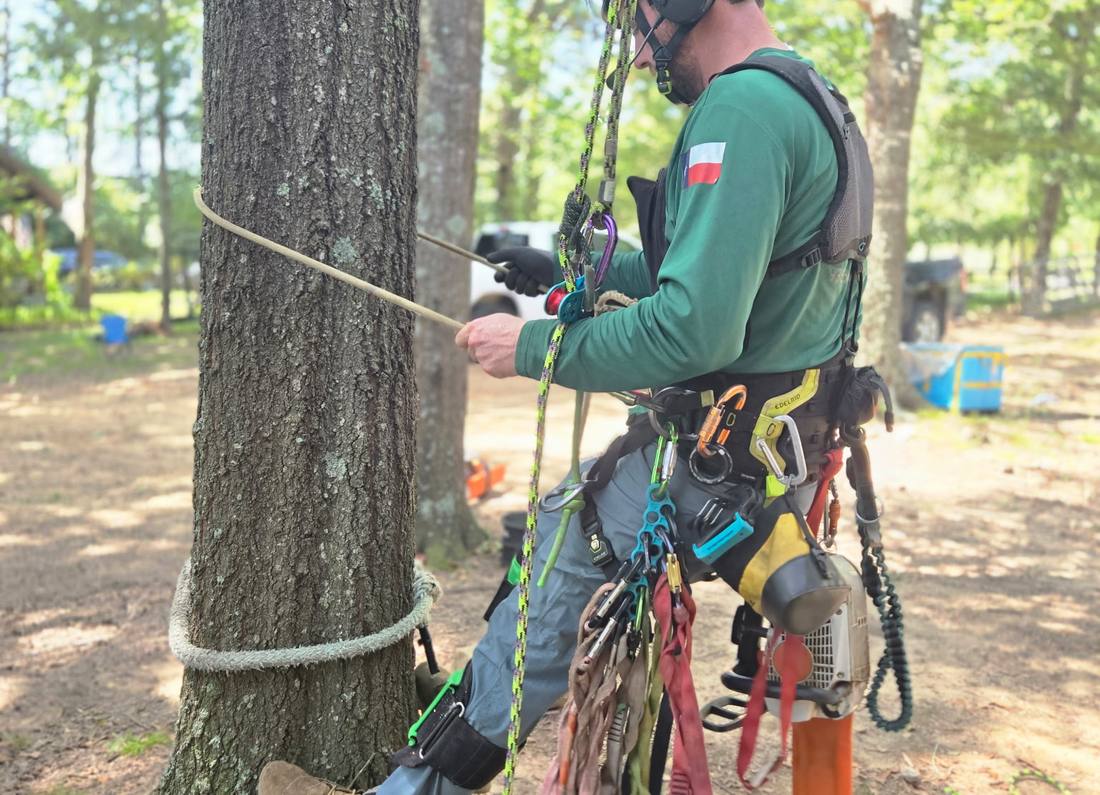
Chinese tallow. The worst of them in this region. It takes creek bottoms, ditches, fencelines and any wet low spot, tolerates flooding and shade, seeds prolifically, and resprouts vigorously from a cut stump and from root fragments. Birds and floodwater both move the seed, so a single mature tree upstream reseeds everything below it.
Chinese privet. Builds a dense evergreen understory beneath a forest canopy and shades out everything trying to regenerate at ground level. A privet-choked woodlot has no young oaks, no beautyberry, no wildflowers — just privet and bare dirt beneath it.
Japanese climbing fern. A vine-like fern that climbs shrubs and tree trunks and forms mats. Its real danger is that it carries fire vertically off the ground and into the canopy, and its spores move on equipment, boots and hay.
Chinaberry. Fast, weedy, seeds heavily, and spreads from old homesites and fencerows into pasture edges. It resprouts hard when cut.
Callery pear, which most people know as Bradford pear. Planted deliberately in subdivisions for decades, then discovered to cross-pollinate between cultivars and produce fertile, thorny, thicket-forming offspring that colonize field edges and roadsides. If you have one splitting apart in a Conroe or Willis front yard, removal solves two problems at once.
Yaupon is the plant people most often ask about. It is native rather than invasive, but where fire has been excluded it thickens into dense stands that crowd mature trees and close a property in, and it is one of the most common things we are called out to remove. When it comes out it comes out from the roots and tubers, not just cut off at ground level — cut yaupon is back within a season. That work is covered under property beautification.
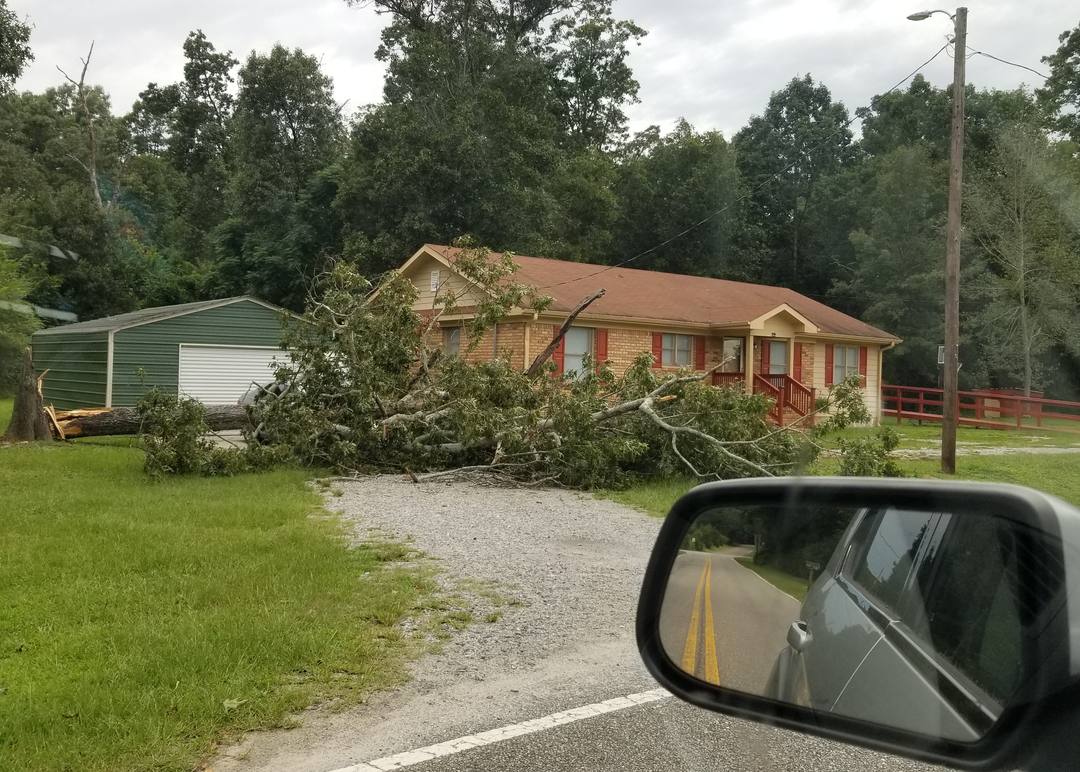
Nearly every woody invasive on that list resprouts from the stump or the roots. Cut a tallow off at ground level and you get a ring of shoots that will be over your head within a year, growing off an established root system, and you have made one tree into a dozen stems.
Effective control depends on the species and the season: cut-stump treatment while the plant is moving resources downward, basal work on small-diameter stems, removal of seedlings before they reach reproductive size, and a genuine plan to come back and check. That last part is the difference between control and landscaping. A site that has been treated once has not been solved; it has been started.
This is the part that gets skipped and the part that determines whether the work holds. Whatever grew there was occupying space, light and soil. Clearing it opens all three back up.
Filling that space with natives — American beautyberry, Turk's cap, Texas redbud, native grasses and forbs on the open ground — means the invasive seedling that germinates next spring is competing rather than colonizing. It also means the site starts doing something useful: holding a creek bank, feeding pollinators, producing fruit for birds, instead of just being cleared.
Edges and wet ground. Fencelines, ditches, the strip between a mowed yard and a woodlot, creek bottoms, and anywhere equipment has disturbed the soil. On rural acreage around Willis and northern Montgomery County, the pattern is usually tallow and chinaberry marching in from the fenceline. In wooded neighborhoods around Huntsville and New Waverly, it is privet under the canopy and climbing fern on the trunks. Around newer Conroe and Montgomery subdivisions, it is escaped Callery pear on the undeveloped edges.
Included
Typical range: Quoted per property
Reviews
I can’t say enough great things about this company! They were incredibly friendly, professional, and truly a breath of fresh air to work with. They safely removed a dead tree from my property and even went above and beyond by neatly stacking the wood for me to use as firewood this year. Their prices were very fair, and the quality of their work exceeded my expectations. The Arborist (billy) helped me identify every tree on my property. If you’re looking for a reliable, honest, educated and skilled tree service, I highly recommend Branching Out Arboreal and Native Plant Specialists — you won’t be disappointed!Victoria Tillman · 8 months ago
Branching Out did an amazing job removing a dangerously dead pine tree from our backyard. The tree was right next to power lines, a transformer pole, fences, and close to our home, so it was a very difficult removal with almost no room for error. The tree was so dead it was basically crumbling while they climbed it, but their crew handled everything safely and professionally without causing any damage at all. What made the job even more difficult was that another healthy tree had actually started growing out of the dead pine, and they were able to carefully remove the pine while saving the healthy tree as well. A few weeks later, another company working nearby actually dropped a tree into power lines and took down a transformer pole — which made us even more grateful we hired Branching Out. These guys clearly know what they’re doing. Highly recommend them for any tree removal or dangerous tree work.Kenzi Standley · 2 months ago
First I want to say Branching Out is a professional company. After talking to Billy he sent me a printed quote for the work we had viewed and discussed . He removed three trees for us. His price was far more reasonable than the three other verbal quotes I had received. Also the other companies came back with lower offers after their bids were rejected. The bids were still not as low as Branching Out. The job was done super well and we enjoyed working with his whole crew, including his associate Tyler who did the stump grinding.Judy Price · a month ago
They did an excellent job cutting down a tall dead pine that was in a tight spot—no one’s favorite thing to do! Great communication, friendly, professional, and courteous. We had a challenge finding someone to service our area, so we are grateful and would highly recommend.everyotherone12 · a year ago
I was trying to save a tree and most companies want to just cut them down. But Kat & Billy went over and beyond to help me save my tree. They had to cut off alot more of the rotton branches than expected. But at least I should be able to keep this tree for were hoping another 5 yrs so I have time to get another one planted and growing before I lose this one. It's my only shade tree. They were very reasonable in thier prices and very knowledgeable. Would definitely use them again and refer them out. Thanks guysKim Taylor · a year ago
Reviews from Google · read them all
Coverage
Questions
Some of it, yes — plan for that from the start. There is a seedbank in the soil and, on most properties, a seed source next door or upstream that you do not control. The goal is not sterilization; it is getting the site to a state where natives are established and holding ground, and where the annual work is pulling a few seedlings instead of clearing a thicket. A property that gets looked at once a year stays ahead of it easily.
The tree in your yard is not spreading by itself — it needs a compatible pollen source — but with how widely they were planted, one is almost always nearby. The offspring are the issue: fertile, thorny and thicket-forming on any unmanaged ground. Separately, Callery pear has a well-known structural flaw, growing tight narrow-angled unions that split the tree apart in wind, usually around the fifteen-to-twenty-year mark. Most of them come out for that reason before anyone thinks about the ecology.
For a single yard tree, one visit plus follow-up on resprouts. For a fenceline or a creek bottom that has been left alone for years, think in terms of an initial knock-down and then a couple of seasons of follow-up while natives establish. Anyone quoting a badly infested acreage as a one-and-done job either has not walked it or is not planning to come back.
For seedlings and small stems, no — pulling and repeated cutting works. For mature tallow, privet, chinaberry and Callery pear, targeted cut-stump treatment is what actually stops the resprouting, and it uses far less product than broadcast spraying because it goes on the cut surface only. We will tell you what a specific site needs and what the alternatives cost you in time.
Match the conditions. Wet low ground that grew tallow will support natives that want wet feet. A privet-cleared understory suits beautyberry and Turk's cap, both of which are shade-tolerant and heavily used by wildlife. Open sun is where the pollinator planting goes: coneflower, black-eyed Susan and milkweed for the monarch migration. Texas redbud handles the small-ornamental role that Callery pear was doing badly.
Get in touch
Call and talk to someone who does the work, or send the details and we'll get back to you.
Call (936) 648-2843